



Pathogenic Fungi
Fusarium spp., Pythium spp., Sclerotinia spp., Rhizoctonia spp.

The Problem
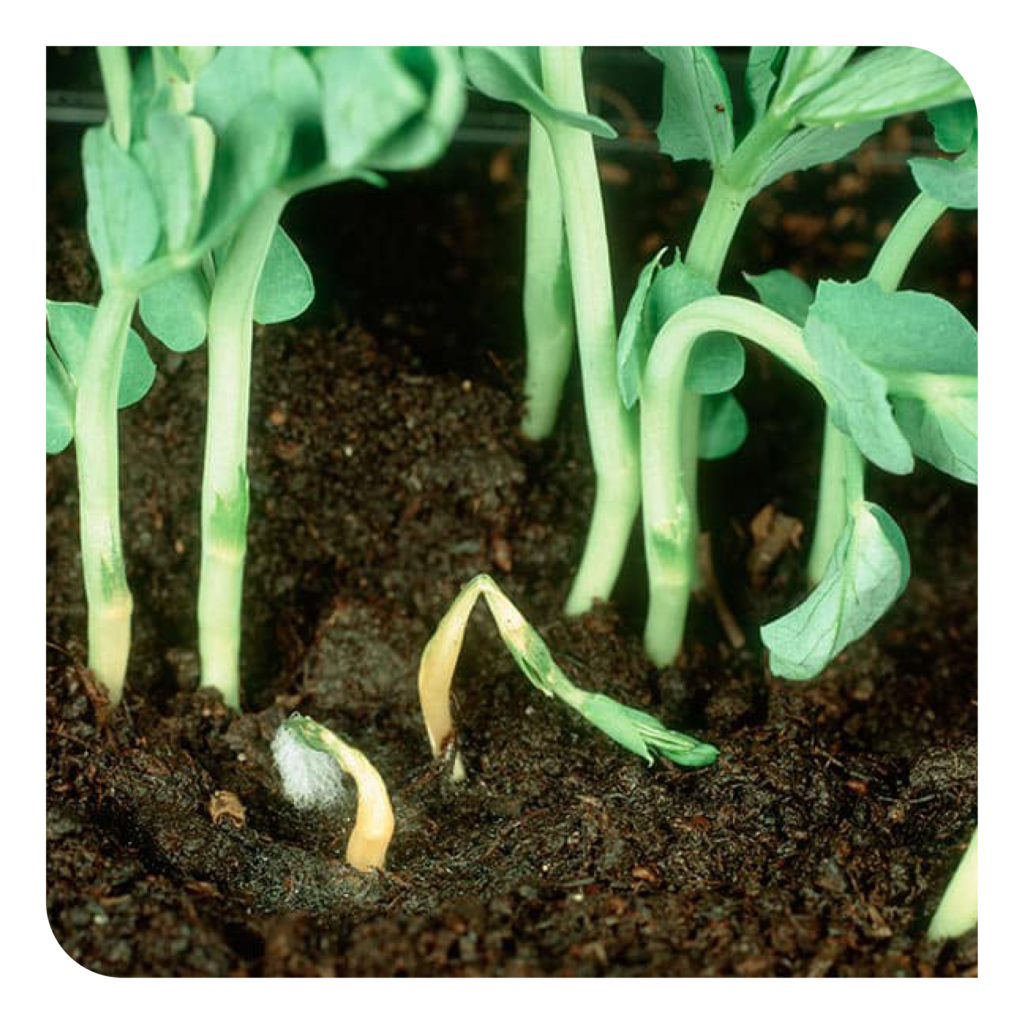
Pathogenic fungi are a major threat to vegetable crops. Young seedlings are particularly vulnerable, often succumbing to “damping-off” shortly after emerging from the soil. Damping-off refers to seedlings dying or collapsing due to fungal infection. Fungi can also cause pre-emergence damping-off, where seedlings die before even emerging from the soil, resulting in poor crop establishment and reduced yields.
CLICK HERE FOR THE SOLUTION
How Does Pathogenic Fungi Damage Your Crops?

Fusarium spp.
Causes vascular wilting disease by disrupting the plant’s water transport system. Symptoms include yellowing leaves, wilting, stunted growth, and dark streaks in roots and lower stems. Can kill seedlings.
Pythium spp.
Leads to root rot, with brown lesions and decaying root layers. Causes damping-off in seedlings, stunted growth, and dieback in mature plants. Particularly problematic in hydroponic greenhouses.

Rhizoctonia spp.
Causes stem and root rot, damping-off in seedlings, dark cankers on stems, brown leaf lesions, wilting, and dieback.

Sclerotinia spp.
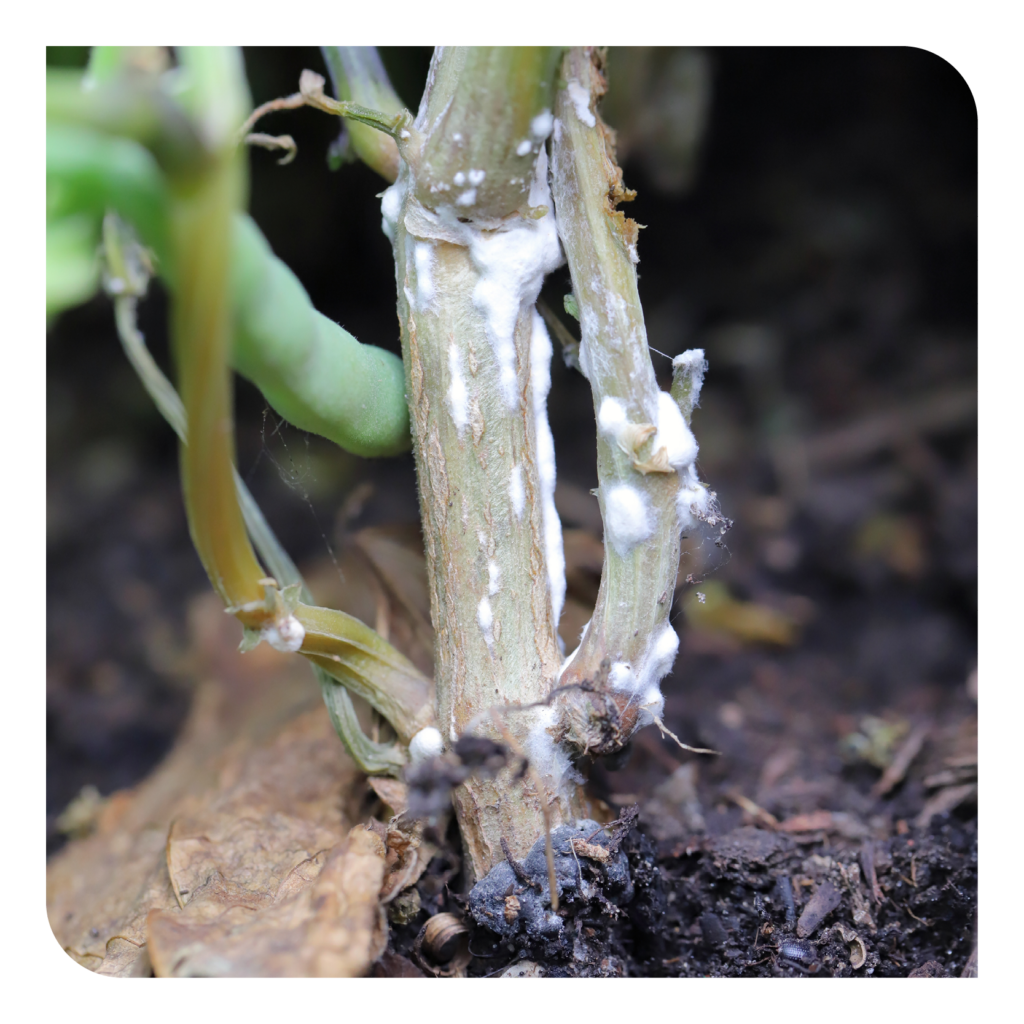
Induces wilting and rotting through water-soaked lesions at the plant base. Cotton-like fungal growth appears on affected areas.

Our Solution

TRICHOTECH®
Contains spores of Trichoderma asperellum, a soil dwelling fungi that is beneficial to plants