




Codling Moth
Cydia pomonella


The Problem
Codling Moth is a major pest for both local and international fruit producers, particularly affecting pome fruit such as apples and pears. The damage caused by this pest can result in significant crop losses and render fruit unmarketable. Because of its destructive effects, controlling Codling Moth is essential and should not be left untreated.
CLICK HERE FOR THE SOLUTIONS

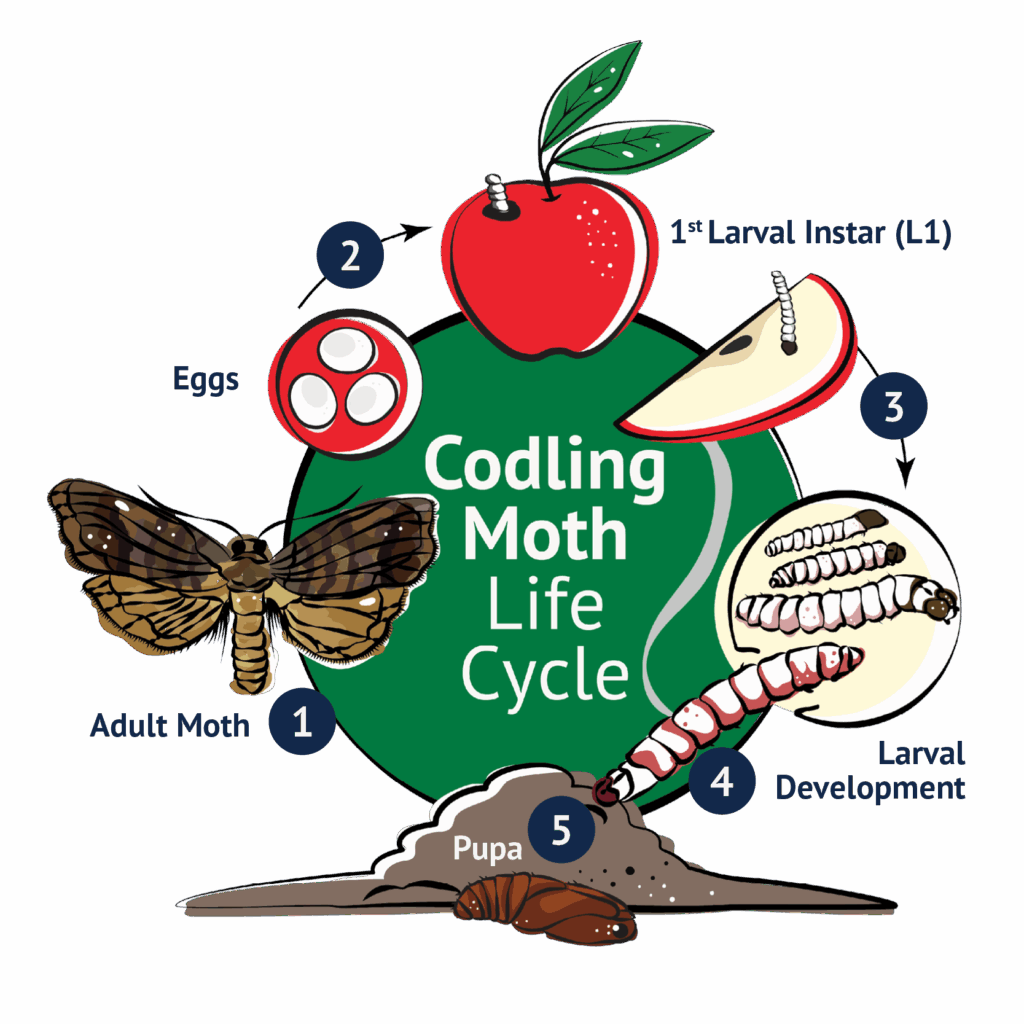
Codling Moth Life Cycle
- Moths begin laying eggs two to three days after emergence, with each female capable of laying 100–400 eggs during her lifetime.
- Eggs are deposited on the surface of the fruit, and after hatching, the larvae bore into the fruit
- Larvae develop through five larval stages (L1–L5), feeding on the fruit’s interior.
- Once development is complete, the L5 larvae leave the fruit to pupate in the soil.
- Pupation occurs within a tough, brown, silken cocoon, providing protection until the next generation emerges.


How Does Codling Moth Damage Your Crops?
- Newly hatched larvae penetrate the fruit, creating small entry holes that can only be detected through careful inspection.
- On ripe fruit, these penetration points eventually become sunken and brown as the damaged tissue decays.
- Infested fruit often drops from the tree three to five weeks after larval penetration.
- In the packhouse, fruit that becomes infested shortly before harvest is particularly difficult to identify, which can lead to post-harvest decay and potential phytosanitary interceptions in export markets.
Our Solutions
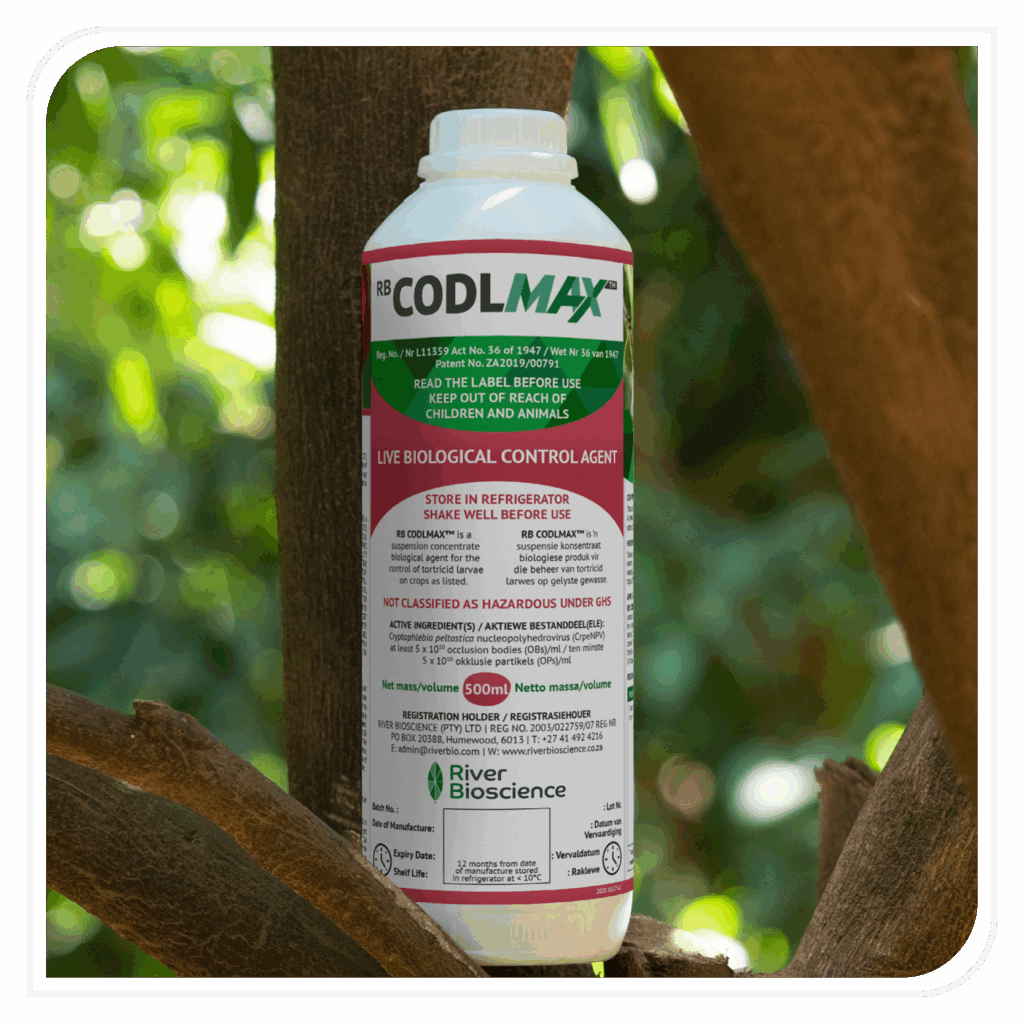
CodlMax
Cryptophlebia peltastica nucleopolyhedrovirus (CrpeNPV)
at least 5 x 10¹⁰ occlusion bodies (Obs)/ml
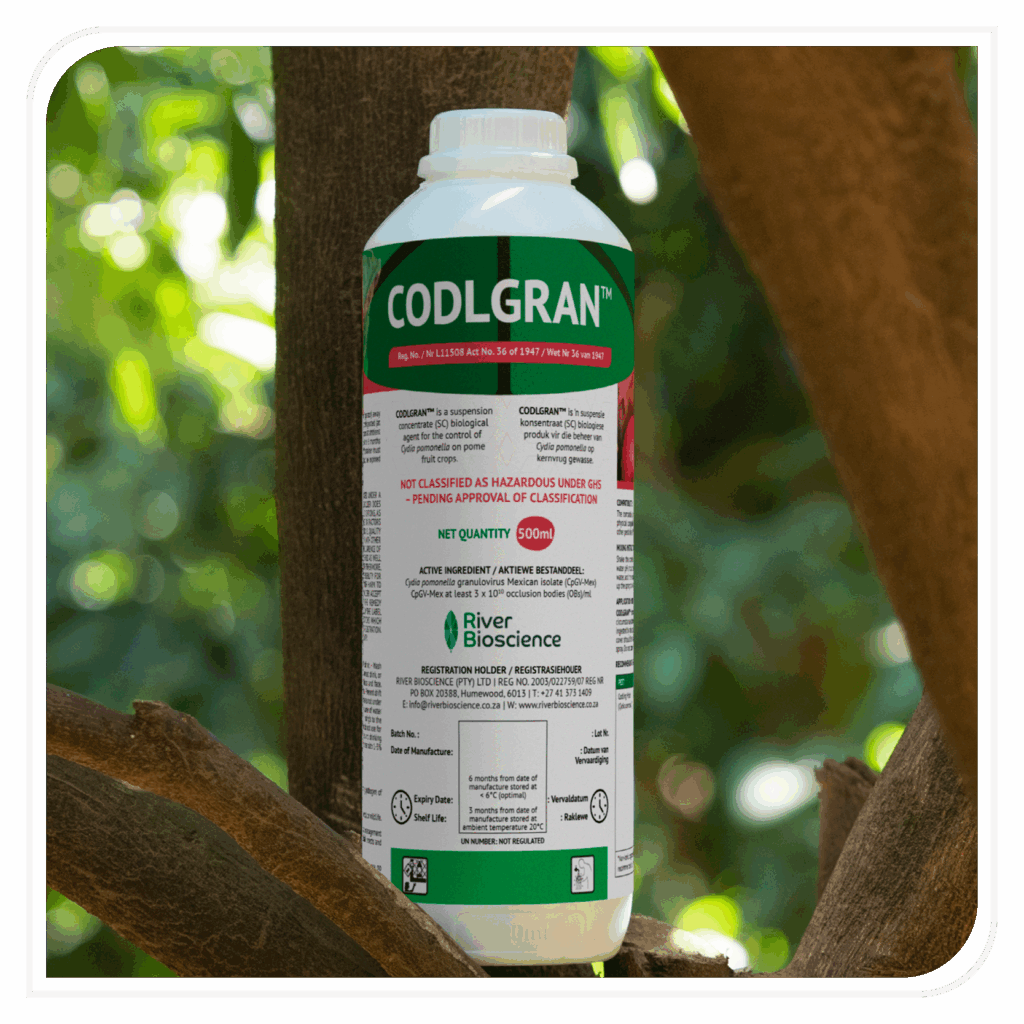
Codlgran
Cydia pomonella granulovirus Mexican isolate (CpGV-Mex)
CpGV-Mex at least 3 x 10¹⁰ occlusion bodies (OBs)/ml