




Litchi Moth
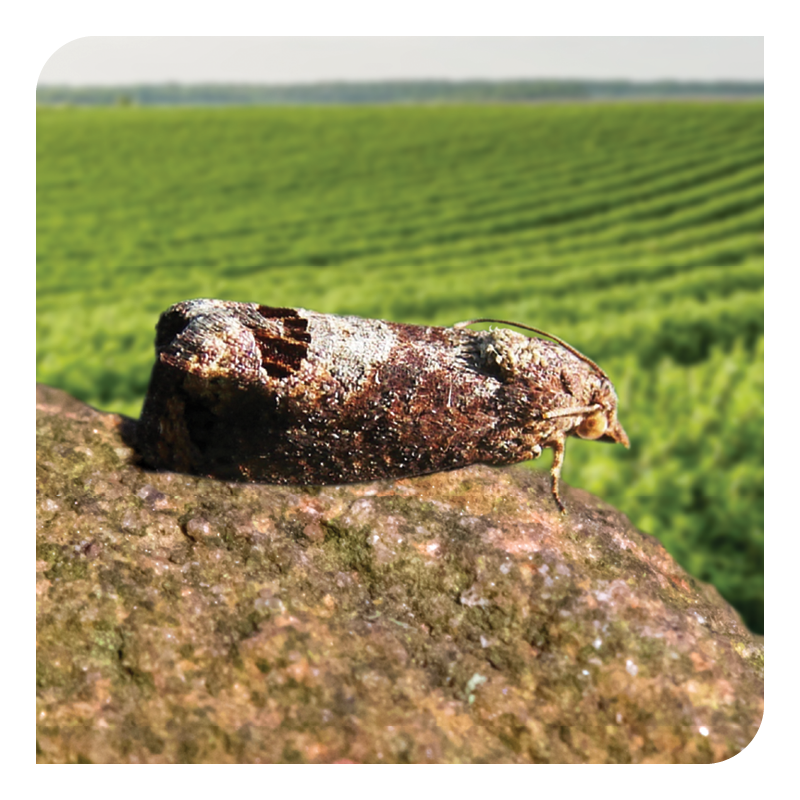
Cryptophlebia peltastica

The Problem
Litchi Moths are native to South Africa and pose a significant economic threat to litchi crops. Infestations can lead to substantial yield losses. Beyond direct damage, the presence of Litchi Moth can trigger phytosanitary restrictions, affecting export markets and negatively impacting growers’ return on investment.
CLICK HERE FOR THE SOLUTION


Litchi Moth Life Cycle
- Eggs are laid on the surface of the fruit throughout the fruiting season.
- After hatching, larvae bore into the fruit and make their way into the seed, developing through five stages (L1–L5) while feeding within the seed.
- Pupation can occur either inside the fruit or in the soil beneath the tree. When pupation occurs inside the fruit, the brown cocoon is partially visible, protruding slightly from the fruit. If pupation takes place in the soil, mature L5 larvae leaves the fruit to pupate underground.


How Does Litchi Moth Damage Your Crops?
- Newly hatched larvae penetrate the fruit, feeding on the flesh and making their way into the seed.
- Larval feeding creates penetration holes, which can be identified through careful inspection.
- Infested fruit is prone to secondary infestations and fungal growth, leading to rot. Late-season infestations may cause post-harvest decay.
- The presence of larval activity within the fruit can be identified by reddish-brown granular excreta extruding from the penetration holes onto the surface of the fruit.
- The damage renders the fruit unmarketable and can also result in phytosanitary interceptions in receiving markets.
Our Solutions
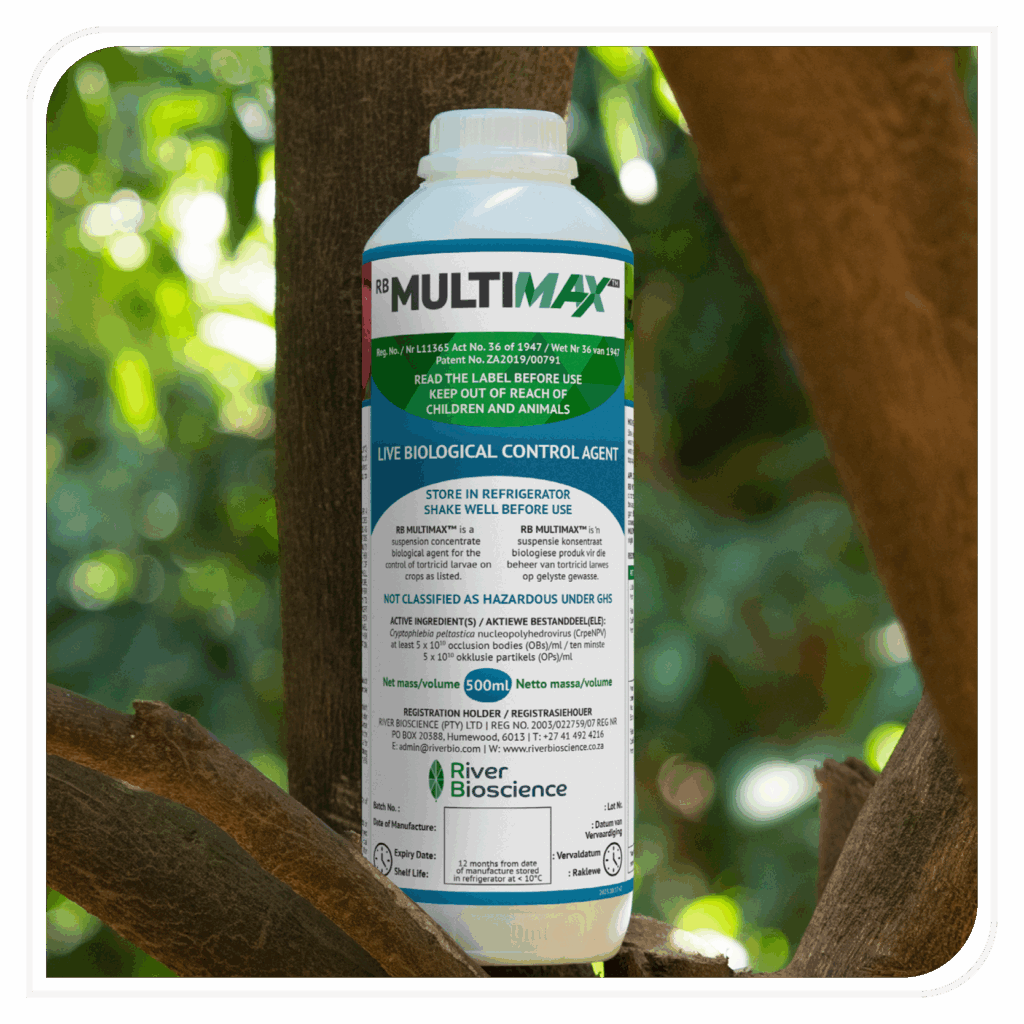
MultiMax
Cryptophlebia peltastica nucleopolyhedrovirus (CrpeNPV)
at least 5 x 10¹⁰ occlusion bodies (Obs)/ml