



Ants
Pheidole megacephala (Brown House Ants) & Anoplolepis custodiens (Pugnacious Ants)

The Problem
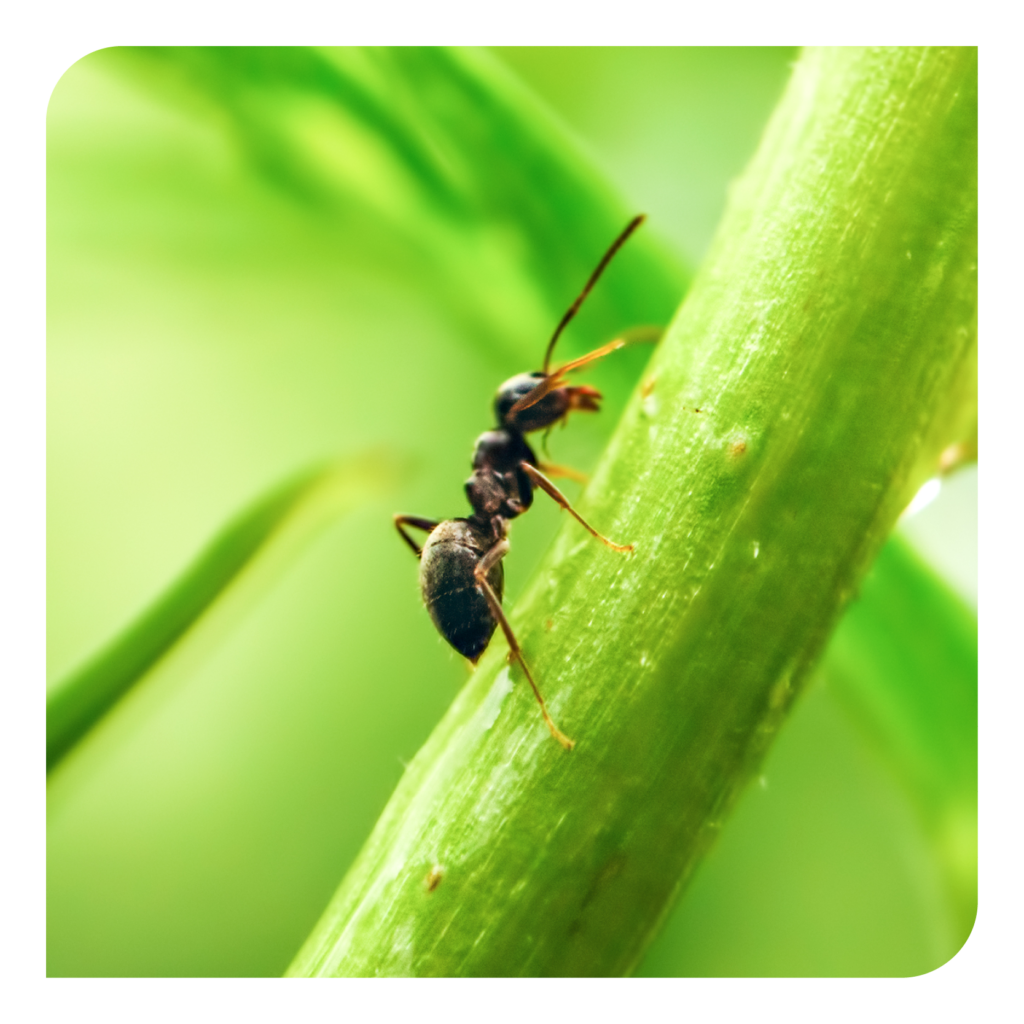
Hemipteran pests such as woolly whitefly, mealybugs, and scale insects threaten both fruit quality and market access. By secreting honeydew, they encourage the growth of sooty mold that leaves blemishes on fruit while weakening overall tree health. Ants, attracted to the honeydew, further complicate control efforts by protecting these pests from their natural enemies.
CLICK HERE FOR THE SOLUTION

Ant Life Cycle
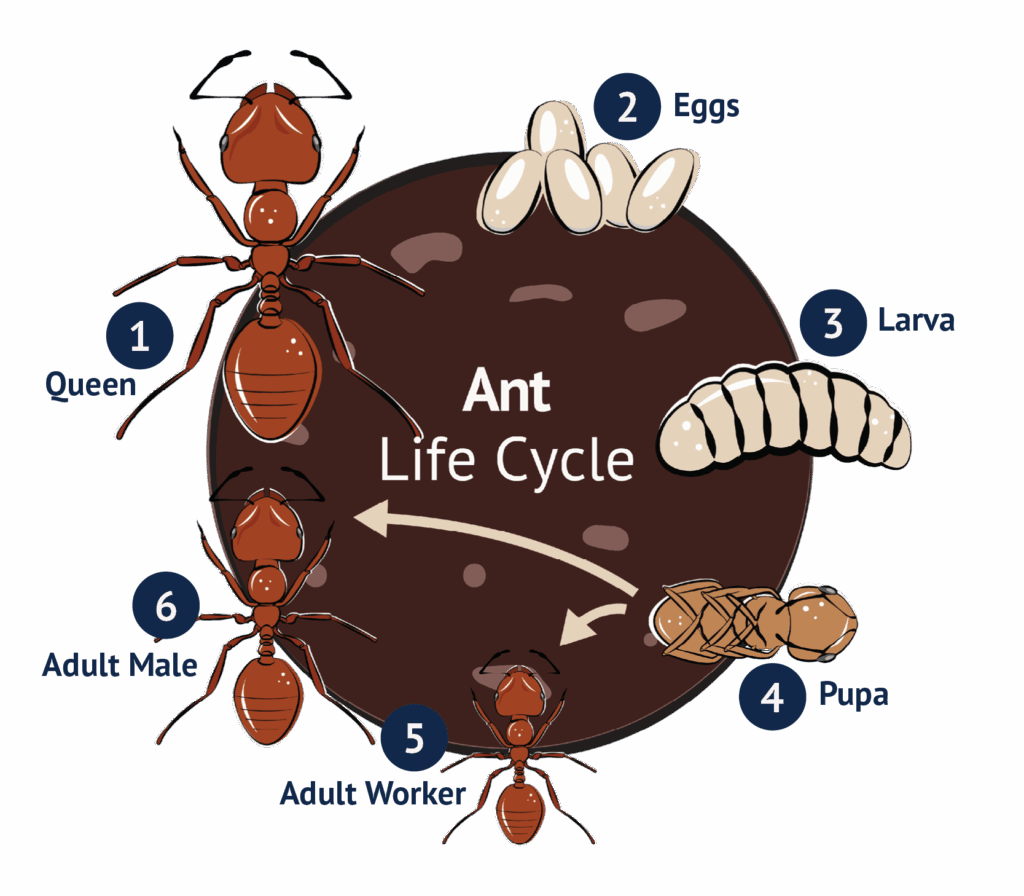
- In an ant colony, the queen is solely responsible for laying eggs.
- The eggs are small, oval, and soft.
- The eggs develop into larvae that depend on adult ants for nourishment.
- Pupae form next, with folded legs and antennae; they start off whitish in colour before darkening as they mature.
- Once fully developed, adult ants take on specific roles: worker ants, which do not reproduce, are tasked with foraging, nest building, and cleaning.
- Male ants exist primarily to mate with the queen.

Negative Effects of Ants
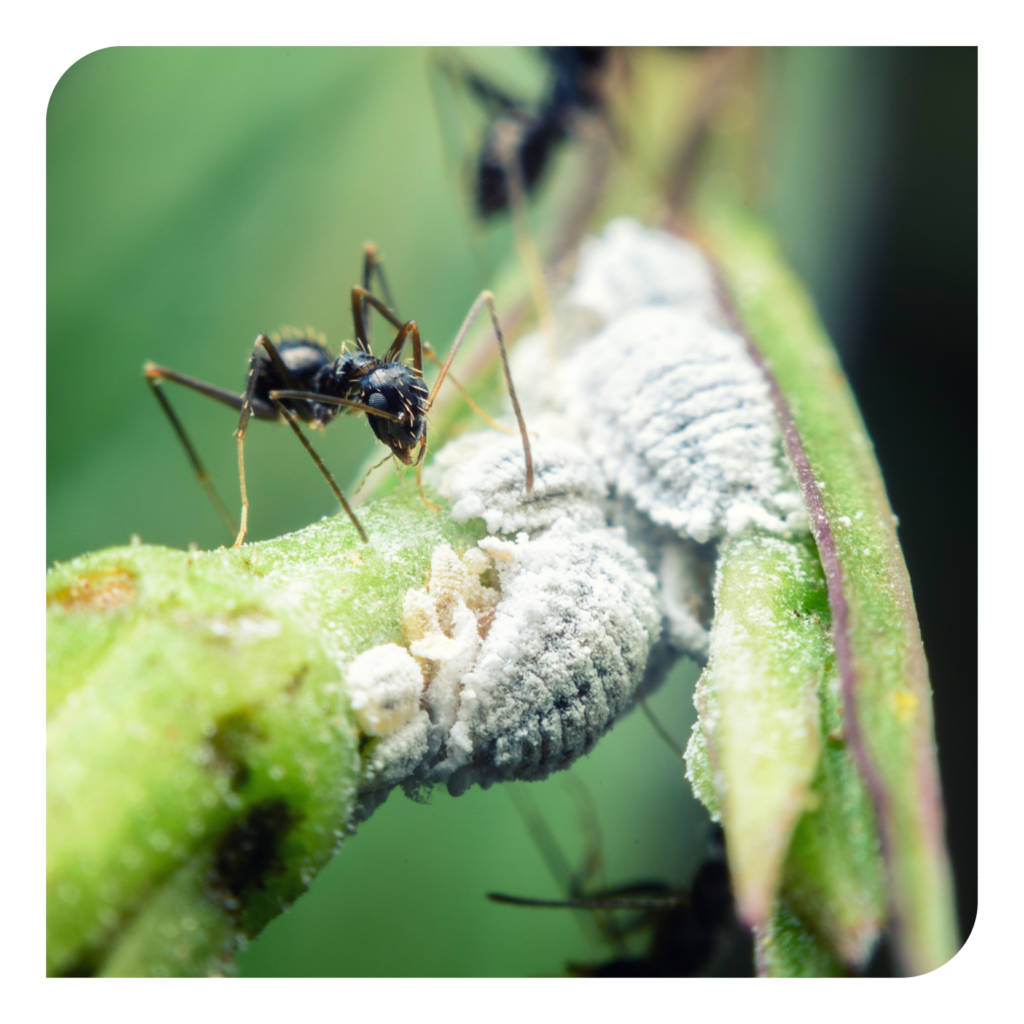
- Ants are strongly attracted to honeydew as a food source, with entire colonies sustained by it.
- In return, ants protect honeydew-producing insects from natural enemies and biocontrol agents, reducing the effectiveness of pest management and eroding grower returns.
- This cycle worsens plant stress, compromises fruit quality, and raises market access risks.
- As a result, growers may be forced to apply additional, unplanned chemical sprays—driving up costs and leaving unwanted residues.
Our Solution

SAGA
Hydramethylnon (9g/kg)