



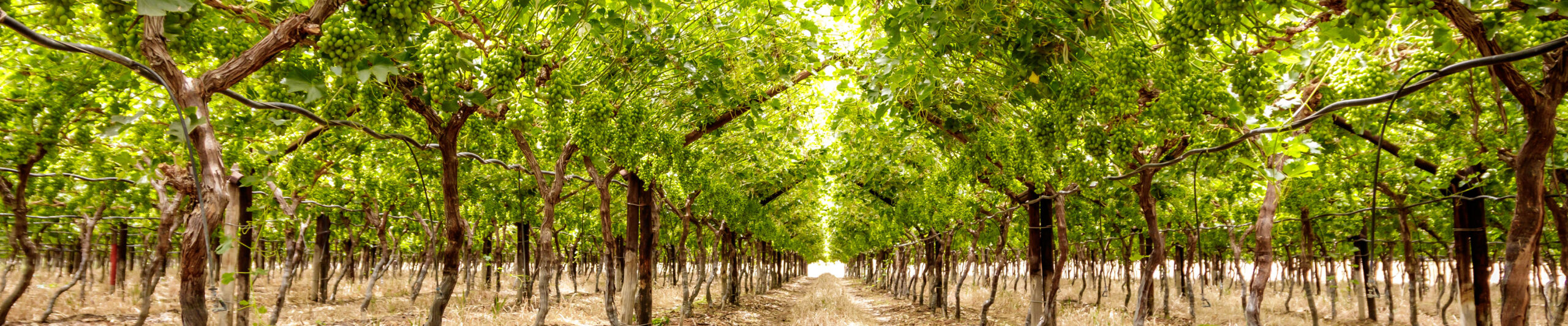
False Codling Moth (FCM)
Thaumatotibia leucotreta

The Problem
False Codling Moth (FCM) is a notorious pest for both local and international fruit producers. It damages fruit, leading to significant crop losses and reduced returns, while also creating phytosanitary challenges that can restrict exports to certain markets.
CLICK HERE FOR THE SOLUTIONS
BIO-INSECTICIDES
MATING DISRUPTION
EGG PARASITOID


FCM Life Cycle
- Adult moths begin laying eggs 2–3 days after emergence, with each female producing 100–400 eggs over her lifetime.
- Eggs are deposited on the fruit surface. Once hatched, larvae bore into the fruit.
- Larval stages L1–L5 develop inside the fruit, feeding on the soft pulp for 35–67 days.
- The L5 larvae exit the fruit to pupate in the soil.
- Pupation lasts 29–40 days in winter and 21–24 days in summer. Pupae are protected within a tough silken cocoon in the soil.

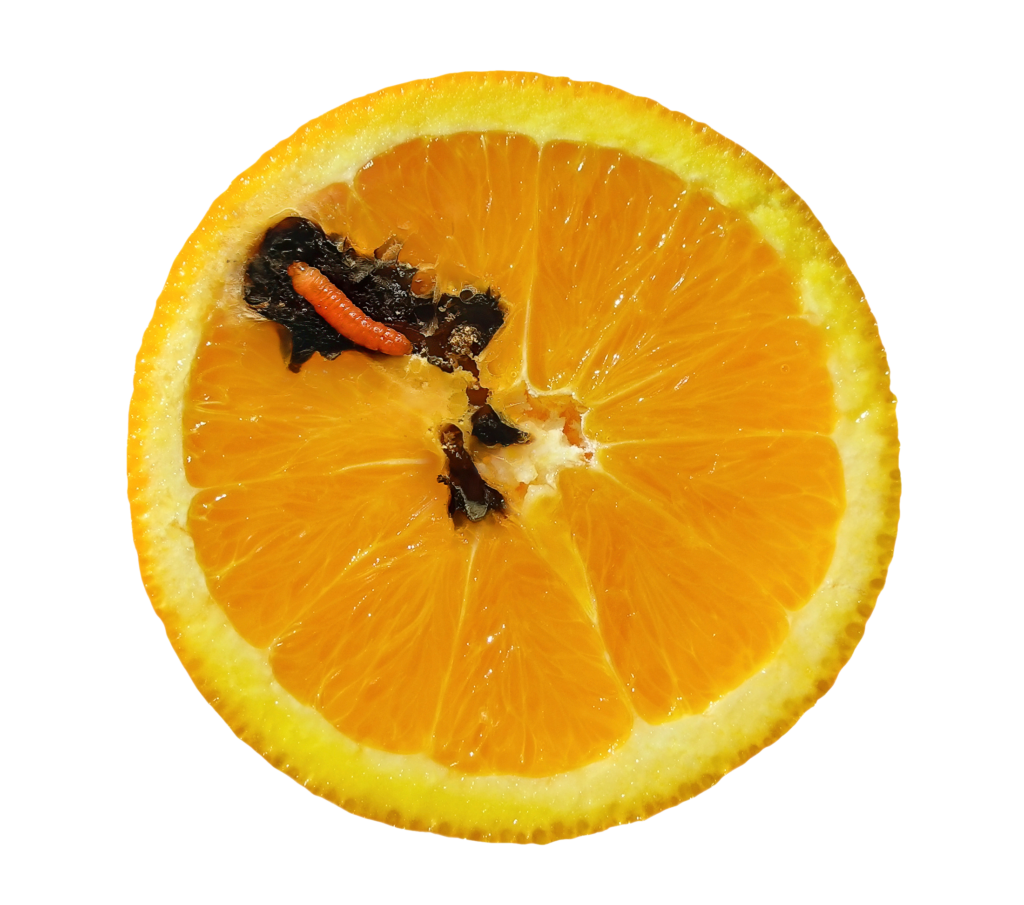
How Does FCM Damage Your Crops?
- Newly hatched larvae penetrate the fruit, often unnoticed without careful inspection.
- The feeding creates tiny entry holes, which eventually become sunken and brown as the tissue decays.
- Infested fruit typically drops from the tree 3–5 weeks after larval penetration.
- Fruit infested shortly before harvest is difficult to detect in the packhouse, increasing the risk of post-harvest decay and potential phytosanitary interceptions in export markets.
Our Solutions

Cryptogran
Cryptophlebia leucotreta granulovirus (CrleGV-SA)
At least 5 x 10¹⁰ occlusion bodies (OBs)/ml
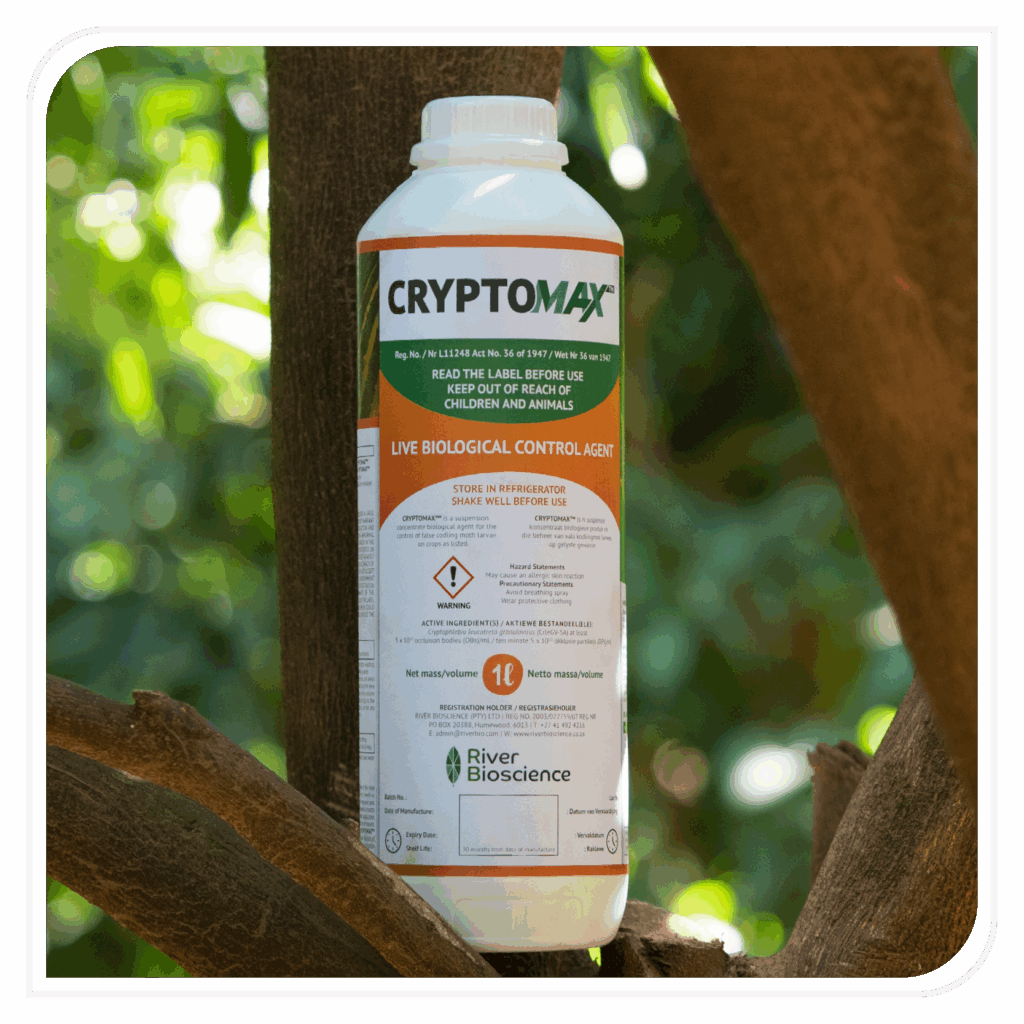
CryptoMax
Cryptophlebia leucotreta granulovirus (CrleGV-SA)
At least 5 x 10¹⁰ occlusion bodies (OBs)/ml
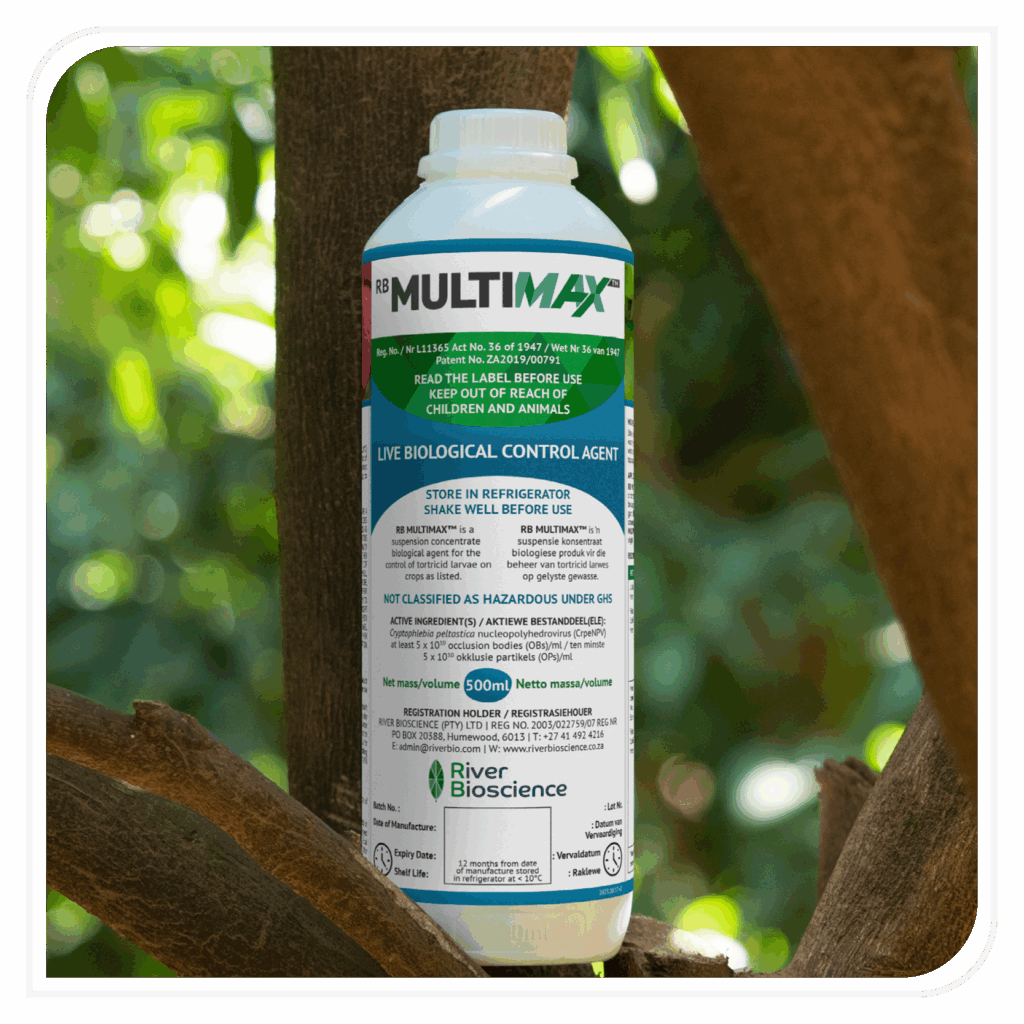
MultiMax
Cryptophlebia peltastica nucleopolyhedrovirus (CrpeNPV)
At least 5 x 10¹⁰ occlusion bodies (Obs)/ml
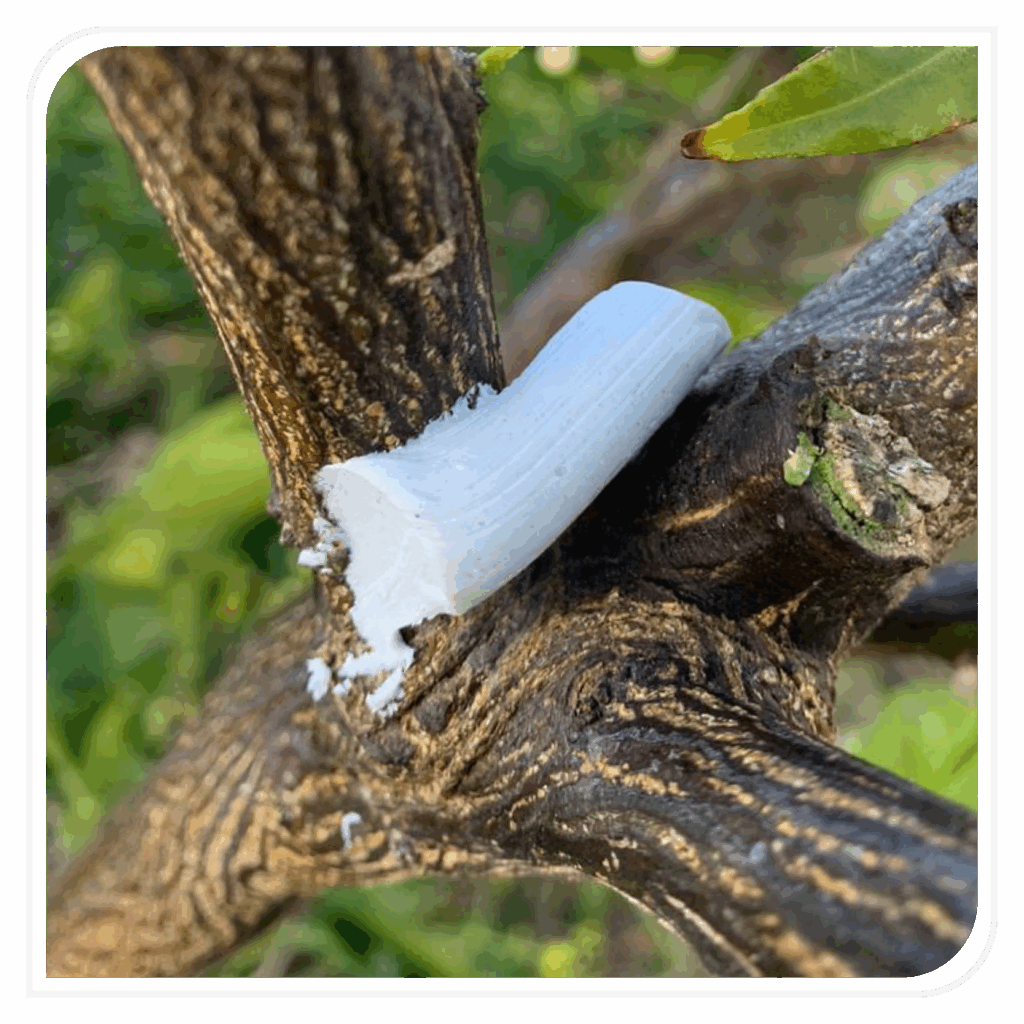
SPLAT FCM
15 g Dodecenyl Acetate E8 | 15 g Dodecenyl Acetate Z8 / kg
3%

TrichoMax
Trichogrammatoidea
cryptophlebiae

Sterile Insect Technique (SIT)
Release of sterile
Thaumatotibia leucotreta