




Macadamia Nut Borer (MNB)
Thaumatotibia batrachopa


The Problem
The Macadamia Nut Borer is a serious phytosanitary pest, requiring strict control measures to maintain access to certain export markets. Its feeding damage can cause significant economic losses in susceptible crops.
CLICK HERE FOR THE SOLUTION

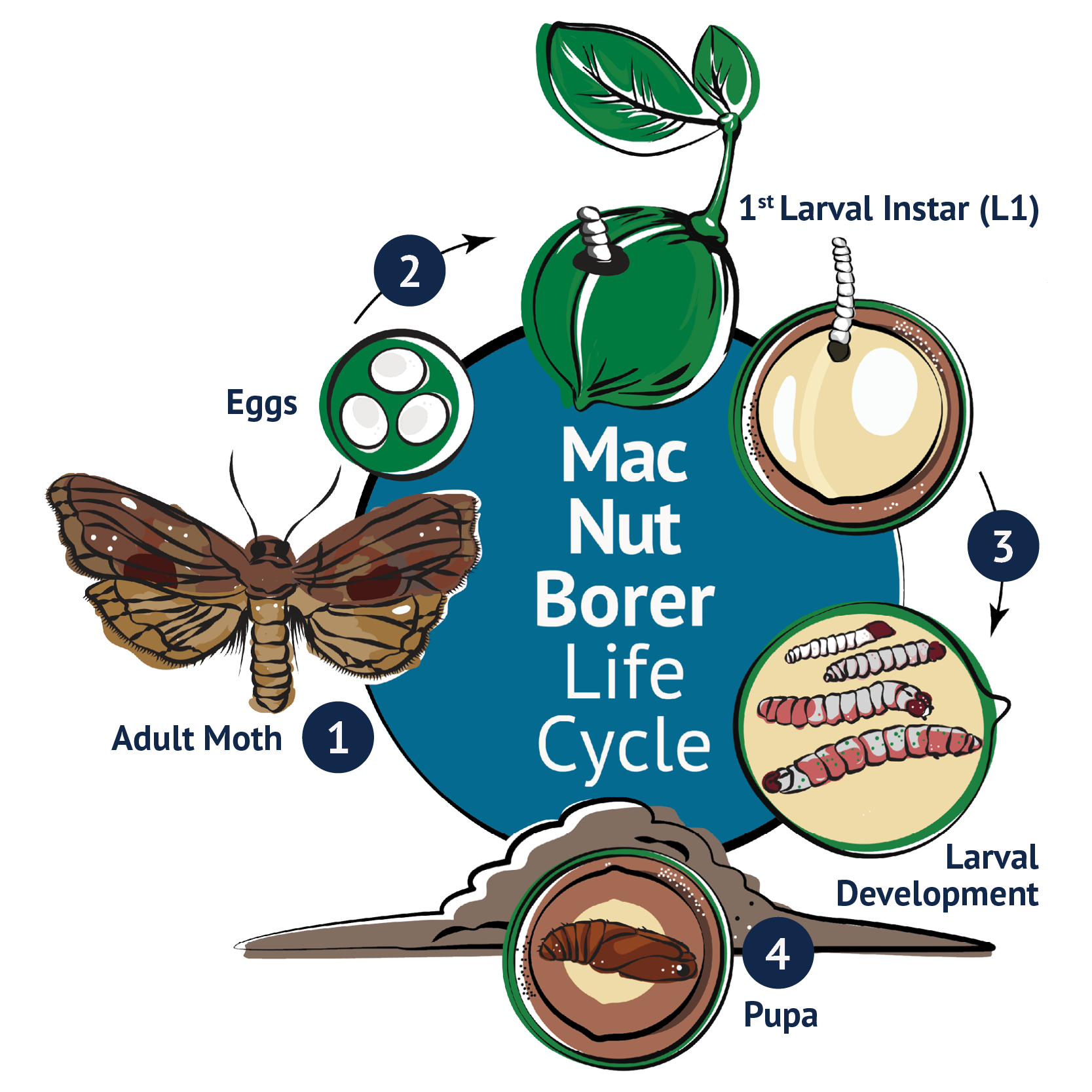
Macadamia Nut Borer Life Cycle
- Adult moths are reddish-brown with a distinctive black triangular marking on the edge of each forewing.
- Females lay their eggs on the surface of the nut husk. After hatching, larvae bore into the green husk to reach the kernel.
- The larvae (L1–L5) develop inside the husk, feeding on husk tissue as they grow.
- Pupation occurs within the damaged nut or husk, where the pupae are enclosed in a tough, brown, silken cocoon.

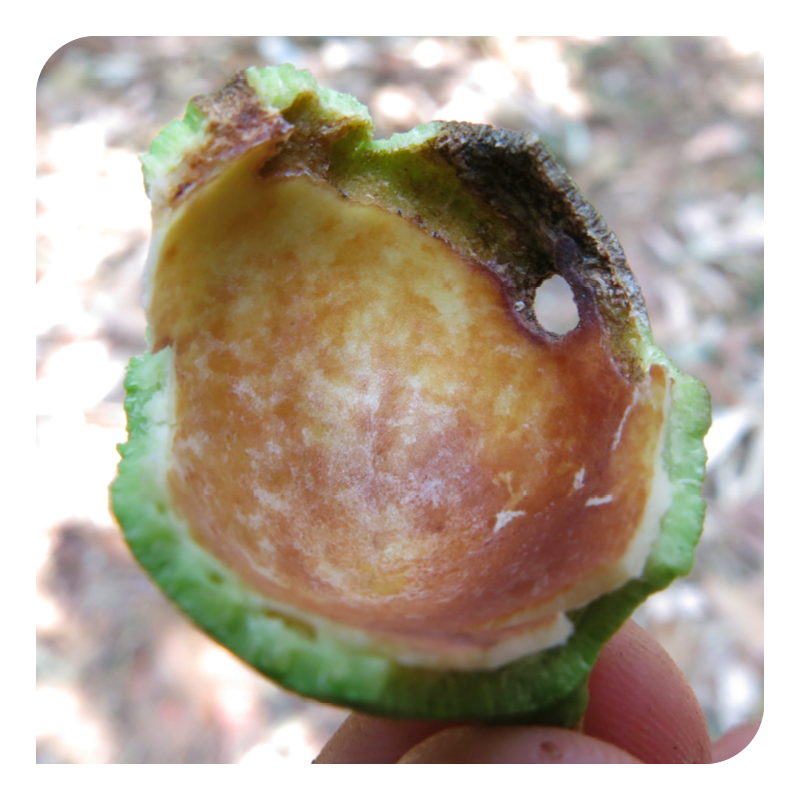
How Do Macadamia Nut Borers Damage Your Crops?
- Macadamia Nut Borer larvae burrow into developing nuts. In smaller nuts, they may consume the entire kernel, while in larger nuts only part of the kernel is destroyed.
- Although larvae cannot penetrate hardened shells, they continue to feed inside the husk to complete their development.
- Damaged nuts are often shed prematurely, leading to yield losses of up to 20%.
- Monitoring is difficult, making effective control challenging. Resistance management is critical, as many growers rely on calendar-based spray programmes rather than timing applications to peak pest activity.
- This increases the risk of resistance development, especially to long-residual products such as pyrethroids.
Our Solutions
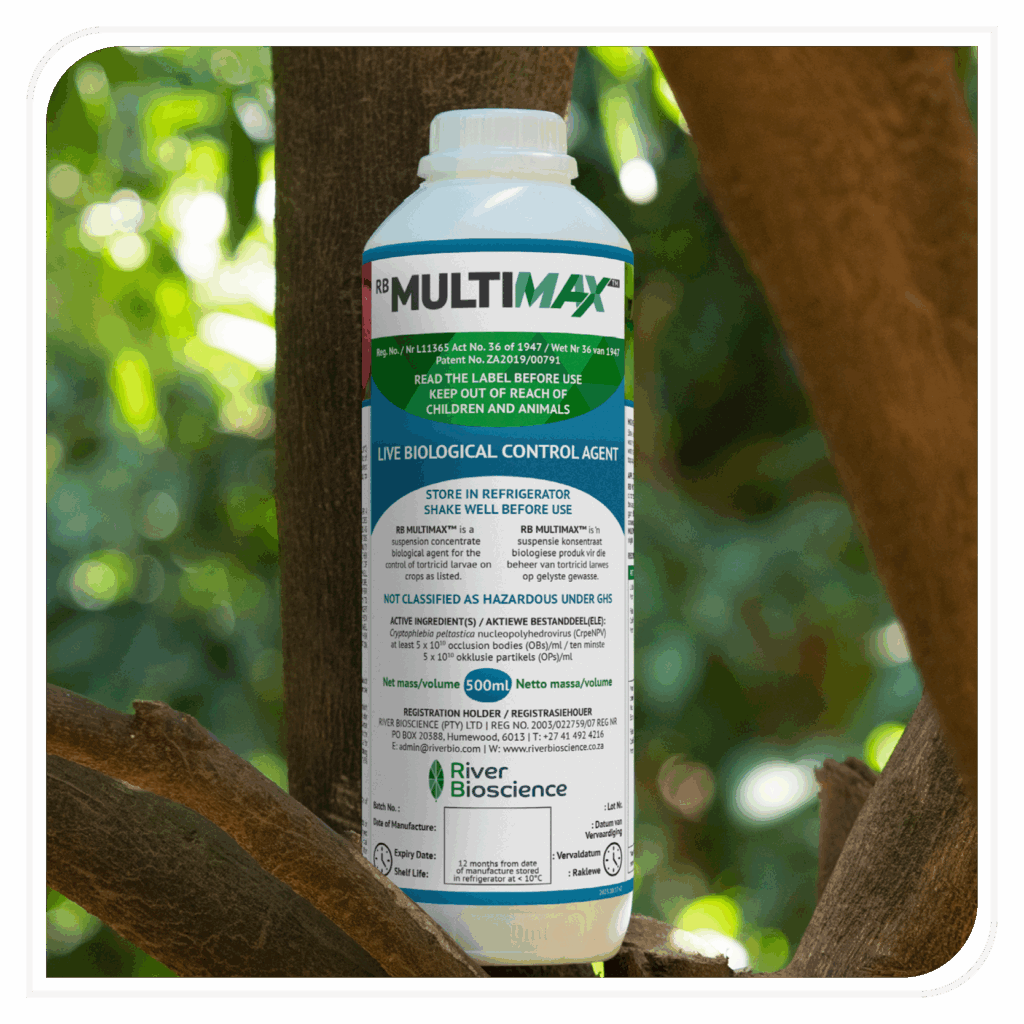
MultiMax
Cryptophlebia peltastica nucleopolyhedrovirus (CrpeNPV)
at least 5 x 10¹⁰ occlusion bodies (Obs)/ml