




Bollworm
Helicoverpa armigera

The Problem
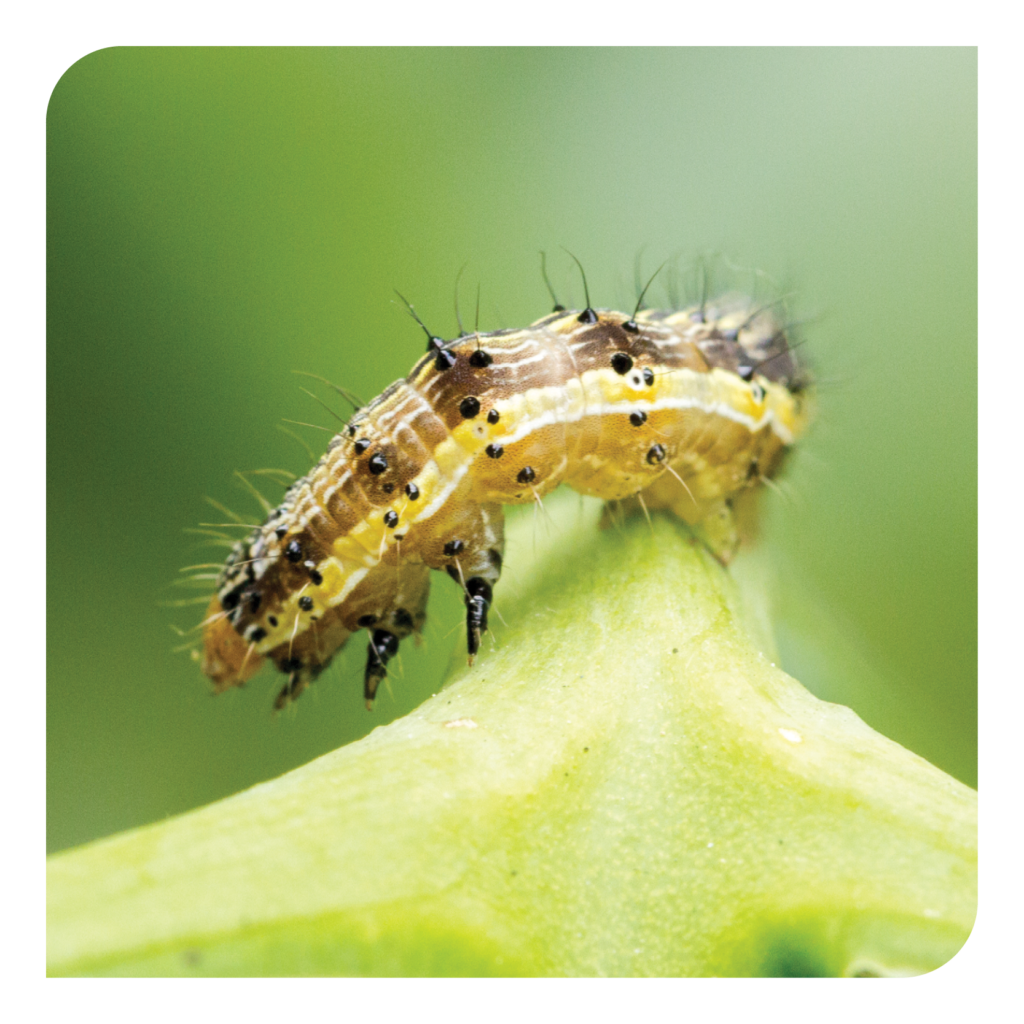
Bollworm is a major pest affecting a wide variety of crops, notable for its rapid mobility, high reproductive rate, and ability to build resistance to pesticides. These pests are particularly difficult to control because they spend much of their development feeding inside fruiting sections of plants, where insecticides are less effective.
Bollworm is also known by several other names, including African bollworm, Cotton bollworm, tobacco budworm, American bollworm, and corn earworm.
CLICK HERE FOR THE SOLUTION

Bollworm Life Cycle
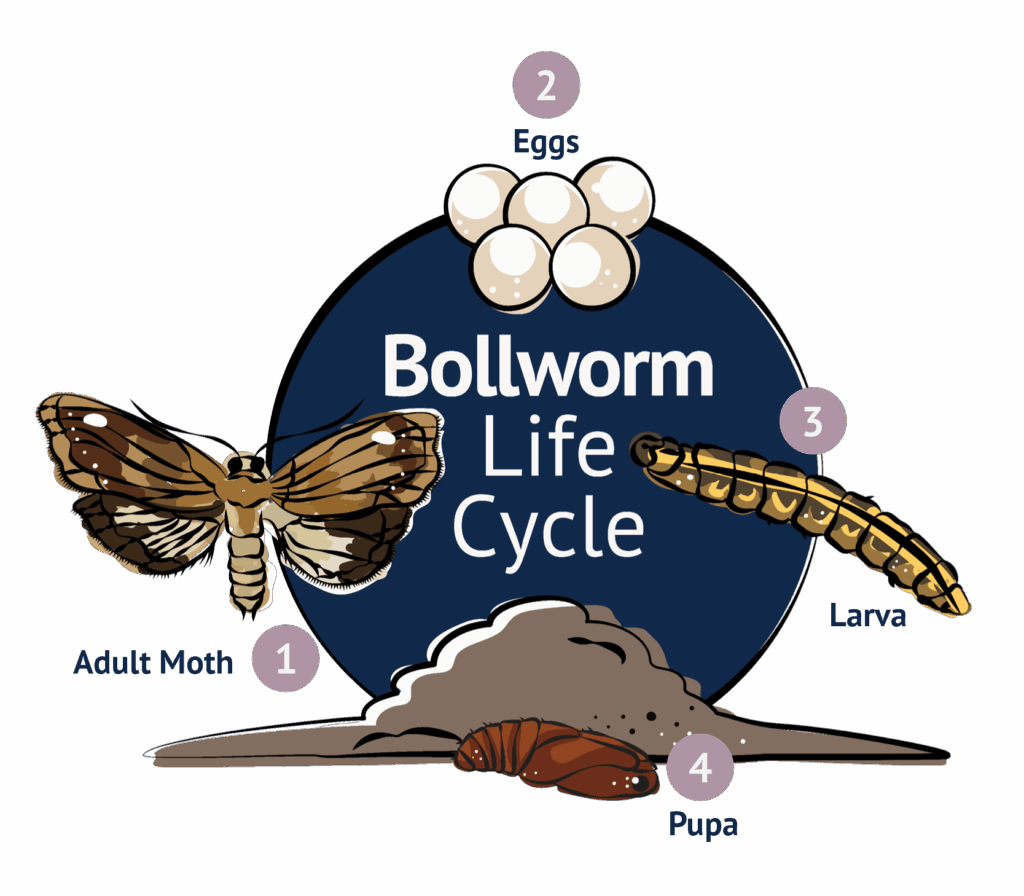
- Moths begin laying eggs two to three days after emergence, with each female capable of laying between 100 and 400 eggs during her lifetime.
- Eggs are deposited on the surface of the fruit, and after hatching, the larvae bore into the fruit.
- Larvae progress through five developmental stages (L1–L5), feeding on the soft pulp for 35 to 67 days. Once fully developed, L5 larvae leave the fruit to pupate in the soil.
- Pupation lasts 29–40 days in winter and 21–24 days in summer, with the pupae enclosed in a tough silken cocoon for protection.

How Does Bollworm Damage Your Crops?
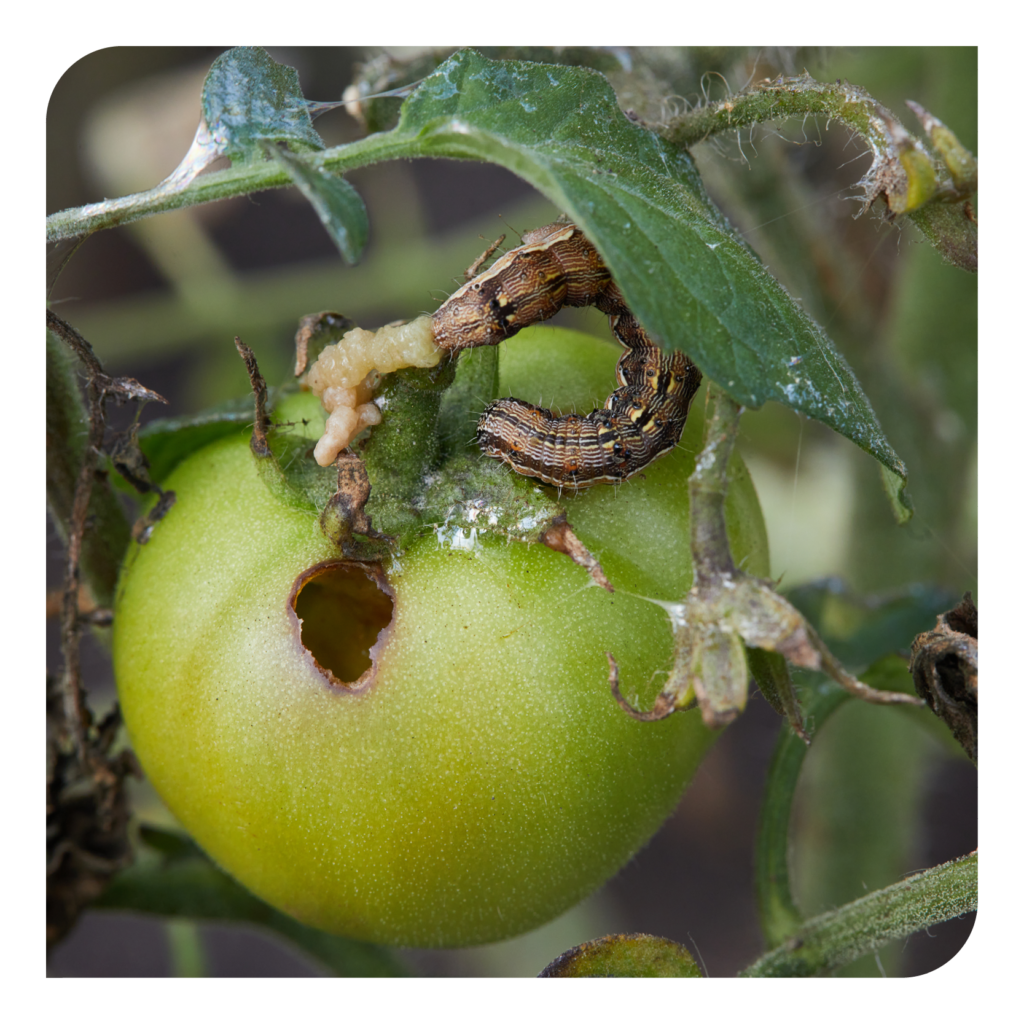
Bollworm larvae feed on fruit, flowers, leaves, buds, and growth points. While leaf damage can reduce the plant’s photosynthetic capacity, the primary economic impact comes from feeding on fruits and flowers, which reduces yield. Larvae typically bore neat, round holes into fruits or pods, which serve as entry points for secondary infections, often leading to rot. A single bollworm can damage multiple fruits or pods, making this pest particularly destructive if not managed effectively.
Our Solution

HeliMax
Helicoverpa armigera nucleopolyhedrovirus
(HearNPV) at least 5 x 10⁹ occlusion bodies (OBs)/ml