






Effective Control of Plant Parasitic Nematodes on Vegetable & Flower Crops
MYTECH® contains Paecilomyces lilacinus (F18), a naturally occurring nematode-killing fungus used to manage plant parasitic nematodes, including root knot, cyst, root lesion, burrowing and reniform nematodes, amongst others, on vegetables and flowers.
Reg. No. L9077: Act No. 36 of 1947
Downloads
Benefits

No Resistance Development

No Harmful Residues and No Phytotoxicity

No REI and No PHI

Self-propagates in the Field

Curative and Protective Activity

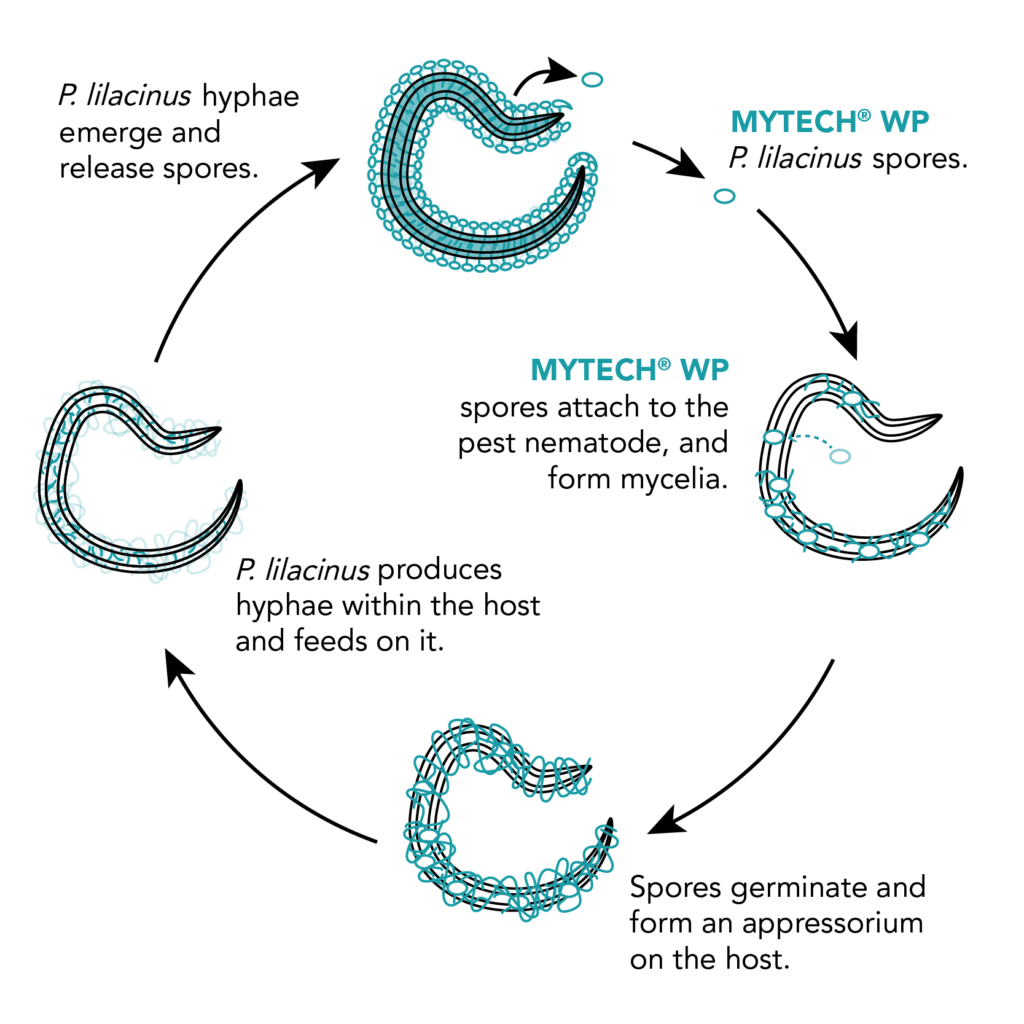
How does it work?
- Attachment – upon attachment to the host, P. lilacinus forms a dense mass of mycelia that form conidiophores from which spores are formed in long chains.
- Invasion – spores germinate and produce a specialised cell (appressorium) with a penetration peg that enters and infects the host.
- Proliferation – the fungus produces hyphae inside the host’s body and feeds on the internal contents.
- Emergence – hyphae emerge from the egg and produce conidia which are released and continue the infection cycle.

MYTECH® has good synergy with other soil-beneficial organisms such as TRICHOTECH®.