





Effective Control of False Codling Moth (FCM) Larvae Across Various Crops
Scientific trials and performance data show that Cryptogran is as effective as chemical applications and, in many cases, outperforms other biopesticides.
Target: False Codling Moth Larvae
Registered Crops: Avocados, Tree Nuts, Grapes, Peaches, Plums, Nectarines, Peppers, Ornamentals, Pomegranates & Persimmons
Reg. No. L7598: Act No. 36 of 1947
Downloads
Benefits

Efficacy
Trials have demonstrated Cryptogran’s ability to reduce FCM infestations effectively, matching or exceeding chemical standards.

Early Application
An additional early spray at the first flight peak significantly reduces cumulative fruit drop compared to applications in November and February only.

IPM Friendly
Cryptogran is fully compatible with Integrated Pest Management (IPM) programs, does not trigger secondary pest outbreaks, and can be safely used alongside beneficial insect releases.

Longevity
Mortality remains measurable for 4–12 weeks following application.
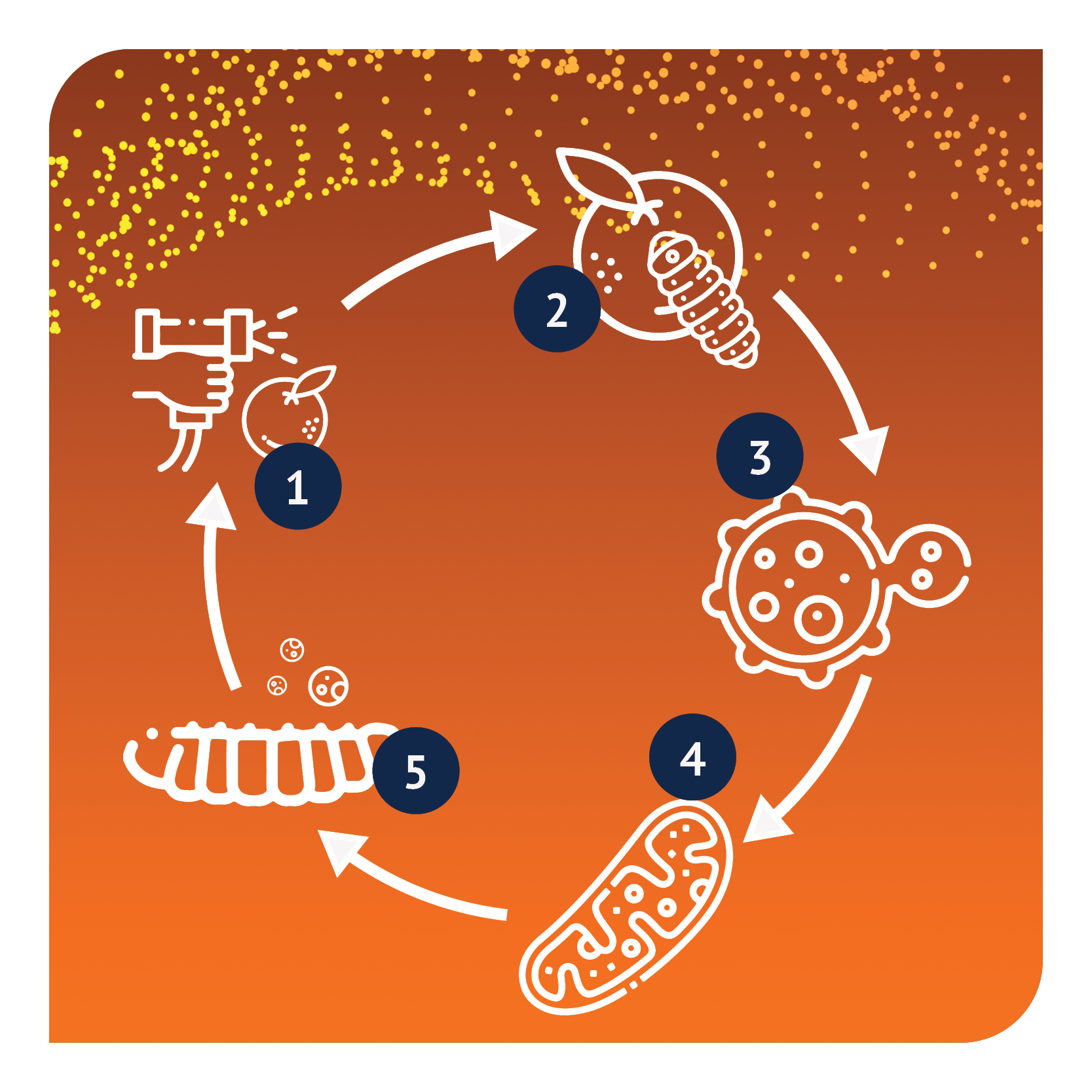
How does it work?
Cryptogran is applied directly to crops, and FCM larvae ingests the virus from the fruit surface.
The high pH in the larval midgut digests the protective protein layer, allowing the virus to be absorbed by microvilli and replicate in the nuclei of midgut cells.
The infection spreads throughout the larvae, leading to death and release of virus particles into the environment, causing secondary infection and amplifying control.

Efficacy & Trial Data:
River Bioscience has developed an extensive dataset from numerous field trials across various regions.
Over 50 independent studies conducted by universities, research institutes, and professional researchers confirm Cryptogran’s effectiveness on a wide range of crops, including citrus, table grapes, avocados, macadamias, litchis, and persimmons.
16
Trials Conducted
5
Crop Types
9
Seasons


Efficacy results show that Cryptogran reduces FCM infestations by greater than 70% for 4-12 weeks after application.