



Fruit set, yield, and produce quality in insect-pollinated crops are ultimately influenced by how many flowers honeybees visit and how effectively they transfer pollen. Hive numbers alone do not determine pollination performance: once bees leave the hive, foraging behaviour is shaped by floral reward, scent cues, weather and colony condition. Apis Bloom is a pollination-enhancing tool designed to influence this behaviour through chemical recruitment signalling. This article outlines what the product is, how it works, the key factors that influence its performance, and the benefits it can provide when incorporated into a well-managed pollination programme.
What is Apis Bloom?
Apis Bloom is a pollination-enhancing product formulated as a pink, wax-like paste containing a proprietary blend of terpenoids. It is not an insecticide, fungicide or plant growth regulator, is not classified as a hazardous substance, and is not a MRL relevant substance of concern. The wax-based formulation is rain-fast and releases its active compounds gradually for approximately 3 to 4 weeks in the field.
The product is based on chemical mimicry of the recruitment signals associated with honeybee foraging. Forager honeybees use scent cues, together with other communication mechanisms, to help themselves and hive-mates locate profitable foraging areas. Apis Bloom places a similar chemical cue within the crop canopy, signalling to bees that the target crop represents a good foraging resource. The objective is to encourage more foragers to enter the crop, concentrate their activity there and return to the crop repeatedly rather than being diverted to competing natural vegetation or other flowering crops.

How does it work?
Honeybee foraging is strongly influenced by the perceived value of a forage source. Bees assess factors such as nectar availability, sugar concentration, pollen availability and scent, and profitable sources are more likely to receive repeat visits. This is particularly relevant where a crop provides a weak natural reward. Kiwi fruit and macadamias are examples of crops that produce little or no nectar, despite requiring effective mediated pollen transfer for satisfactory fruit set.
Where crop flowers provide limited reward, bees may preferentially forage on nearby nectar-producing weeds, cover crops or other flowering vegetation. Apis Bloom is designed to supplement the crop’s natural attraction by providing a recruitment cue directly within the targetted planting area. In this way, it can help influence where foraging effort is concentrated without changing the physiology of the plant. The product essentially removes a step from honeybee resource-seeking behaviour, helping the foraging bees in the colony to locate the target flowers faster and pollinate the crop more effectively.

Standard pollination practices create an uneven distribution of honeybees throughout the field.

Apis Bloom induces a uniform and thorough distribution of pollination activity by honeybees.
Considerations when using Apis Bloom
The performance of a pheromone-based pollination enhancer is dependent on the biological and environmental conditions under which bees are expected to forage. Apis Bloom should therefore be considered as one component of an integrated pollination programme rather than as a substitute for adequate hive quantity and placement, suitable weather or good crop management.
Weather and bee activity
Honeybee flight is constrained by temperature, wind, rainfall and light. Bees generally cannot sustain normal foraging activity at low temperatures, while strong winds and rainfall can substantially suppress flight. Foraging intensity generally increases under suitable temperatures and good light conditions, but very high temperatures can also reduce activity. These limitations are important because a recruitment cue can only influence bees that are able to fly and forage.
Hive placement and crop coverage
Pollination is most effective when bee activity is distributed throughout the crop rather than concentrated close to hive locations. Research in deciduous fruit has shown that fruit set can decline with increasing distance from a hive. This is where Apis Bloom is beneficial to use in pollination programs, as the application of the product throughout the crops canopy distributes the recruitment cue and therefore supports more even foraging coverage across a field/orchard.
Crop flowering pattern and timing
Flowering pattern determines how long an attractant application can remain relevant as well as the number of applications that are required. Crops with a short, synchronous flowering period can often be covered by a single, well-timed application when approximately 5% of the crop’s flowers have started opening. Examples of these crops include macadamias, pome fruit, and kiwi fruit. Other crops produce successive flowering flushes over a much longer period, including berry crops such as blueberries and strawberries. In these systems, an application made at the beginning of flowering may no longer provide adequate coverage by the time later flowering flushes develop. Thus, additional applications will likely be required. Bloom progression should then be monitored so that application timing remains aligned with the period when pollination is required. It is important to note that pollinator attractors like Apis Bloom should not be applied prior to the onset of the flower blooming period. Bees that are attracted to a crop with no flowers will learn to avoid the area and seek out flowering resources elsewhere. It is best to wait for target flowers to start opening (minimum 5% bloom) before applying Apis Bloom in a cropping ecosystem.
Hive quality: the foundation of pollination performance
A recruitment pheromone can influence the behaviour of existing foragers, but it cannot compensate for a weak colony. Colony health is therefore a critical factor in determining the response to any pollination enhancer. Stronger colonies contain more adult bees and brood and have greater capacity to allocate bees to foraging. Research has also shown that strong colonies can begin daily foraging earlier and forage for longer than unhealthy colonies.
South African commercial pollination arrangements commonly specify minimum colony standards, including at least eight frames covered with bees, at least four frames of active brood and a confirmed queen. Colonies that are weak, queenless, diseased or poorly nourished are unlikely to provide the same response to Apis Bloom as strong, healthy colonies. Growers should therefore regard hive quality as a prerequisite for effective pollination enhancement. Apis Bloom can improve the efficiency of an available foraging force, but it cannot create additional foragers.
Increasing the number of weak colonies is not necessarily an effective substitute for adequate colony strength and may increase disease pressure within apiaries. A stronger approach is to combine appropriately stocked, healthy colonies with correctly timed use of the attractant.
Benefits of using Apis Bloom
The agronomic rationale for Apis Bloom follows a clear pollination pathway: increased and more persistent bee activity in the crop can increase the number of flowers receiving adequate pollen transfer, which can influence fruit set and pollination-dependent quality characteristics such as seed number, symmetry and fruit size.
Trial data from kiwi fruit orchards reported a 47% increase in bee activity at the hive entrance, a 61.2% increase in the weight of pollen collected by returning foragers, and a 14% increase in mean fruit set per vine in Apis Bloom-treated orchards compared with untreated controls. Trial data from macadamia orchards showed a 53% increase in bee activity and a 43% increase in wet in shell yields, which is an indicator of improved nut set as a result of sufficient pollination. Trial work done in blueberries reported a 16.5% yield increase, 29% increase in berry weight and a 43% increase in the number of berries harvested per cluster at first harvest.
These different crop measurements demonstrate the impacts of pollination enhancement on pollination pathways and outcomes. Increased bee activity and pollen collection are consistent with greater foraging pressure on the crop, while the observed increase in fruit/nut set demonstrates an agronomic response. The benefit therefore arises through the crop-positive effects on natural bee behaviour that is created by the successful application of Apis Bloom.
Trial Data | Kiwi Fruit:
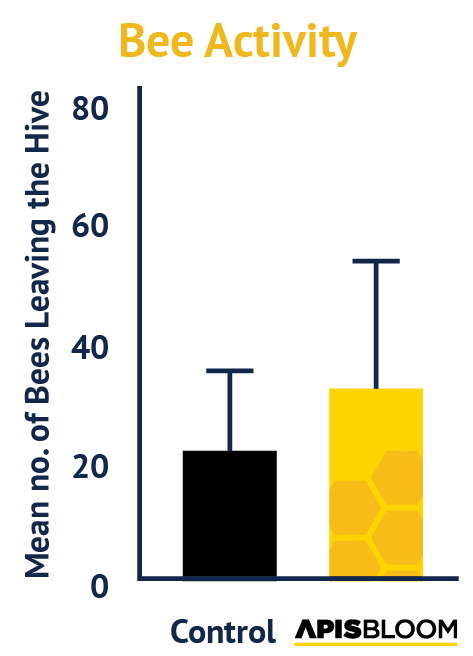
A significant increase in bee activity at the hives in Apis Bloom treated areas. Bee activity was measured by counting the number of bees coming and going from the hive.
Overall, the data indicates a 47% increase in bee activity in Apis Bloom treated orchards.
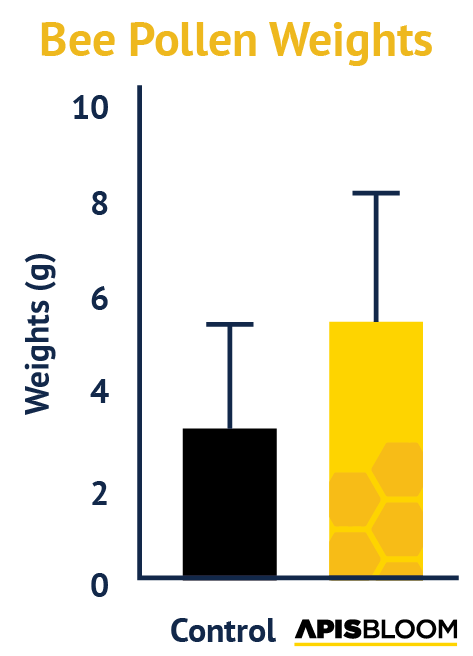
A 61,2% increase in the amount of pollen collected by bees in Apis Bloom treated areas.
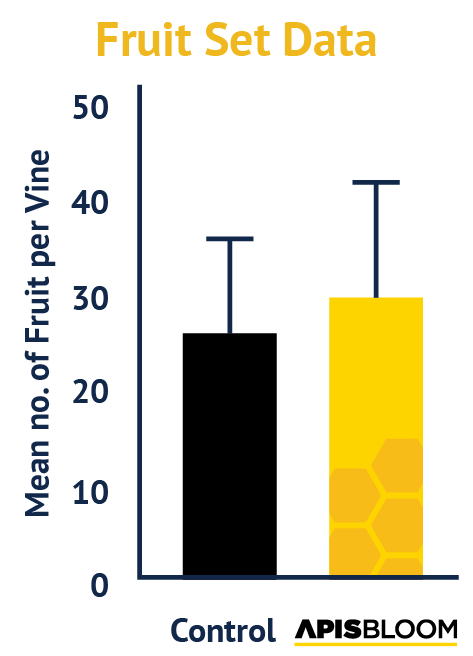
Number of fruit per vine increased by 14% in Apis Bloom treated areas relative to untreated areas.
Trial Data | Macadamia Nuts:
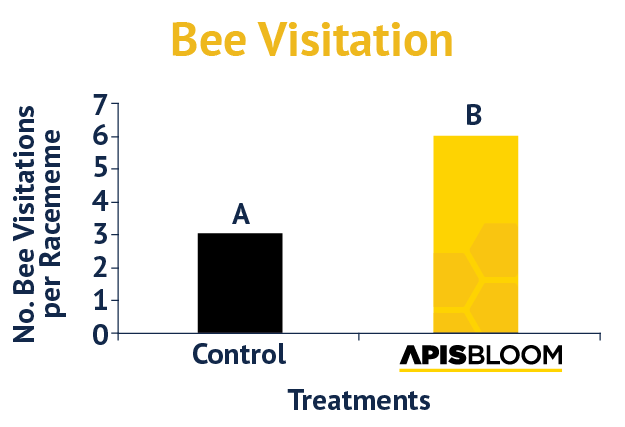
Significant increase of 53,5% in visits on average
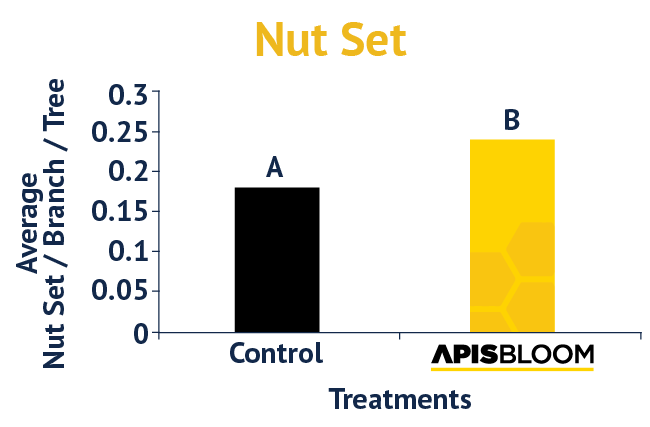
Significant increase in fruit / nut set
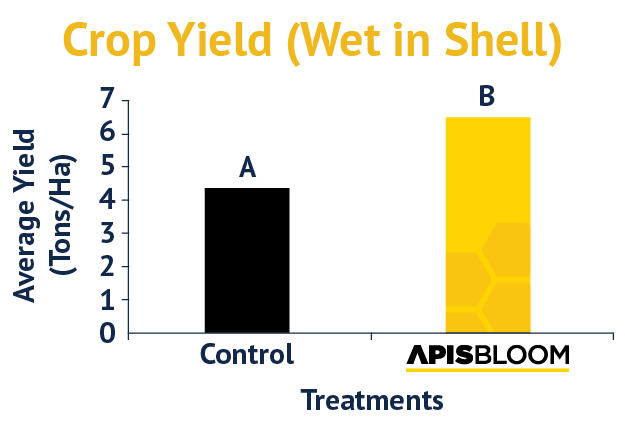
43.1% increase in wet in shell yields
Trial Data | Blueberries:
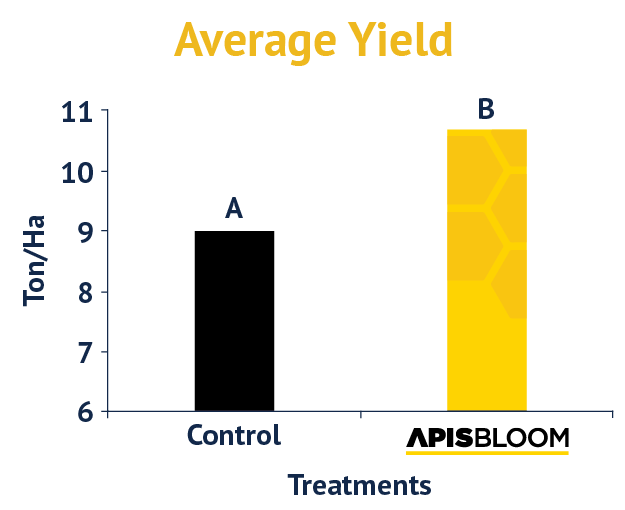
An overall 16.5% yield increase
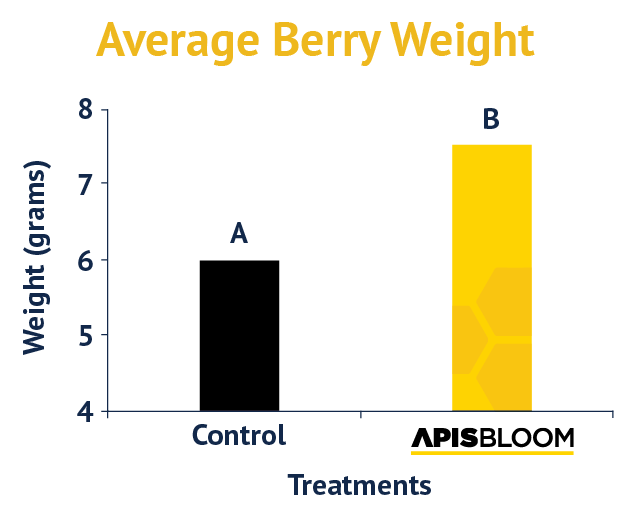
A 29% increase in berry weight
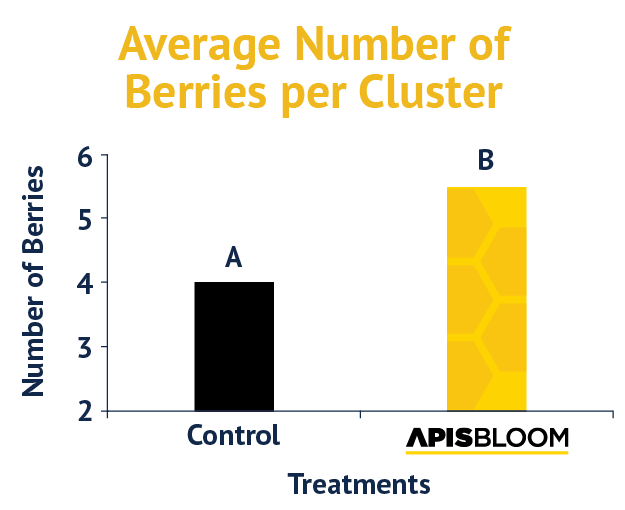
A 43% increase in number of berries per cluster at first harvest
Conclusion
Apis Bloom uses honeybee recruitment signalling to influence where foraging effort is concentrated within a flowering crop. Its slow-release terpenoid formulation provides a persistent cue that encourages bees to enter and repeatedly forage within the targeted planting area. Colony strength and health, crop flowering pattern, and weather determine the number of bees available and their ability to respond; thus, the effectiveness of pollination enhancement is also dependent on the wider pollination system. Used with strong, well-managed colonies, timed to the crop’s flowering period and applied with appropriate attention to weather and bloom progression, Apis Bloom should be viewed as a tool to enhance, not replace, sound pollination management.
Written by Emma Thompson